The hidden inflammation that may be making us age faster
Scientists are investigating whether chronic inflammation is more than a consequence of ageing and whether it could be one of its causes.
Ageing is usually associated with the gradual deterioration of cells and organs. Researchers are increasingly interested in another process: chronic inflammation. As the immune system grows older it can become persistently active even when there is no infection to fight. Scientists call this inflammageing.
Unlike the swelling or redness associated with an injury, the low grade inflammation can persist for years without symptoms appearing. It has been linked to cardiovascular disease, type 2 diabetes, frailty and neurodegenerative conditions. What remains less clear is whether inflammation simply accompanies ageing or contributes to it.
Claudio Franceschi, an Italian immunologist who first introduced the concept of inflammageing in 2000, has spent decades investigating its causes. In a 2025 review published in Nature Aging, he and his colleagues explored how genetics, lifestyle, diet and environmental exposures, including infections and pollution, shape inflammatory activity throughout life.
One contributing factor may be the build up of senescent cells. These are cells that have stopped dividing but remain active and release inflammatory molecules into the surrounding tissues. As the cells accumulate they may contribute to chronic inflammation associated with ageing. In turn, persistent inflammation can cause further cellular damage and encourage more cells to become senescent, creating a cycle that may accelerate the ageing process.
The extent of these changes varies between individuals.
In 2021, researchers at Stanford University analysed blood samples from 1001 people aged 8 to 96. With the use of machine learning they were able to develop an inflammatory ageing clock called iAge, based on patterns of immune system activity.
The study found that higher inflammatory age was associated with multiple chronic conditions and cardiovascular ageing. One molecule called CXCL9 emerged as particularly important because of its association with vascular dysfunction.
The findings suggested that two people of the same chronological age could have substantially different inflammatory profiles and biological age measurement, potentially affecting long term health prognosis.
Can inflammation be influenced?
The possibility of modifying these processes has attracted interest in longevity medicine. Researchers are investigating approaches ranging from those targeting senescent cells to therapies that influence cellular metabolism and inflammatory signalling.
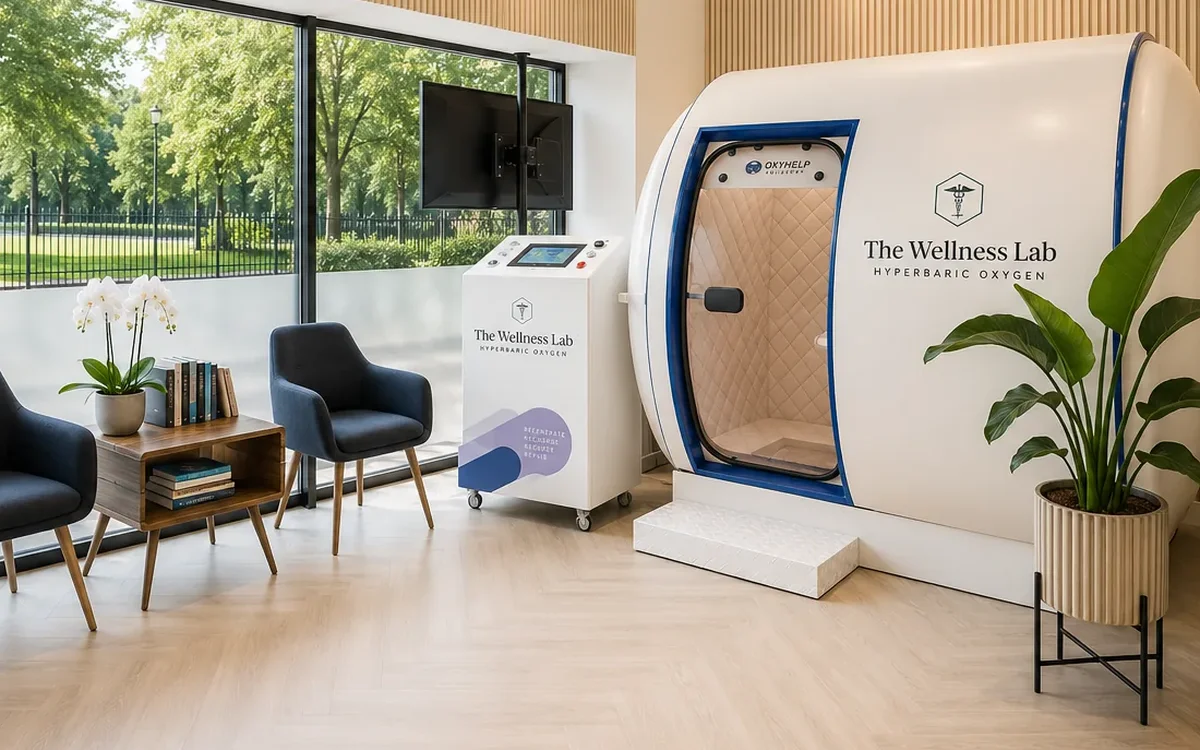
Oxygen is one possibility. Beyond its essential role in keeping cells alive, it influences tissue repair and inflammatory signalling. Hyperbaric oxygen therapy increases the amount of oxygen dissolved in blood plasma by delivering it at higher atmospheric pressure.
A 2026 systematic review examined five clinical studies involving 431 patients with cardiovascular conditions. Some reported reductions in inflammatory markers, including C-reactive protein, alongside improvements in vascular function.
Light is another area of investigation. Certain wavelengths of red and near-infrared light can influence mitochondria, the structures responsible for much of a cell's energy production. Photobiomodulation uses this interaction to influence cellular activity, including pathways involved in inflammation.
A 2025 review examined 15 meta-analyses with 204 randomised controlled trials and more than 9,000 participants. It identified benefits for individuals including disability associated with knee osteoarthritis and fatigue in fibromyalgia.
Hydrogen, the simplest and most abundant element in the universe, is also attracting attention from medical researchers. Molecular hydrogen can enter the bloodstream and diffuse into tissues. Scientists are investigating whether it can influence oxidative stress, a process closely associated with inflammation and cellular ageing.
In 2024, researchers published a randomised controlled study in Free Radical Biology and Medicine involving 37 participants. Those receiving hydrogen inhalation showed a reduction in reactive oxygen species, molecules that can damage cells when present in excess. The findings suggest that hydrogen may influence some of the processes involved in oxidative stress.
A separate study examined the effects of hydrogen water on healthy adults. After four weeks, researchers observed changes in the activity of genes involved in inflammatory responses.
These findings are adding to a growing body of research into how inflammation responds to changes in the cell environment. As scientists develop a clearer picture of inflammageing, the possibility of influencing some of the processes associated with it is becoming an important area of exploration.
Reference list
Franceschi, C. et al. (2025). Toward precision interventions and metrics of inflammaging. Nature Aging. https://www.nature.com/articles/s43587-025-00938-7
Sayed, N. et al. (2021). ‘An inflammatory aging clock (iAge) based on deep learning tracks multimorbidity, immunosenescence, frailty and cardiovascular aging.' Nature Aging, 1, 598–615. https://www.nature.com/articles/s43587-021-00082-y
Almomany, M. et al. (2026) ‘Effects of hyperbaric oxygen therapy on myocardial injury and inflammatory biomarkers: A systematic review with qualitative synthesis', Cureus [Preprint]. https://pubmed.ncbi.nlm.nih.gov/42093774/
Son, Y. et al. (2025). Effects of photobiomodulation on multiple health outcomes: an umbrella review of randomized clinical trials. Systematic Reviews. https://link.springer.com/article/10.1186/s13643-025-02902-3
Chair, S.Y. et al. (2024). The impact of hydrogen inhalation therapy on blood reactive oxygen species levels: A randomized controlled study. Free Radical Biology and Medicine, 222, 601–606. https://www.sciencedirect.com/science/article/abs/pii/S0891584924005562?via%3Dihub
Sim, M. et al. (2020). Hydrogen-rich water reduces inflammatory responses and prevents apoptosis of peripheral blood cells in healthy adults: a randomized, double-blind, controlled trial. Scientific Reports, 10, 12130. https://www.nature.com/articles/s41598-020-68930-2
Interested in this therapy?
Speak to our team to find out how we can help with your specific needs.
Book NowSearch Articles
Categories
Recent Posts
The hidden inflammation that may be making us age faster
November 19, 2026
Can Red and Near-Infrared Light therapy help you sleep?
October 20, 2026
Can Hyperbaric Oxygen Therapy Support Recovery After Cosmetic Surgery?
October 2, 2026
Molecular Hydrogen For Sports
February 5, 2025
Ozone Therapy and Cancer Care
February 5, 2025