Can Red and Near-Infrared Light therapy help you sleep?
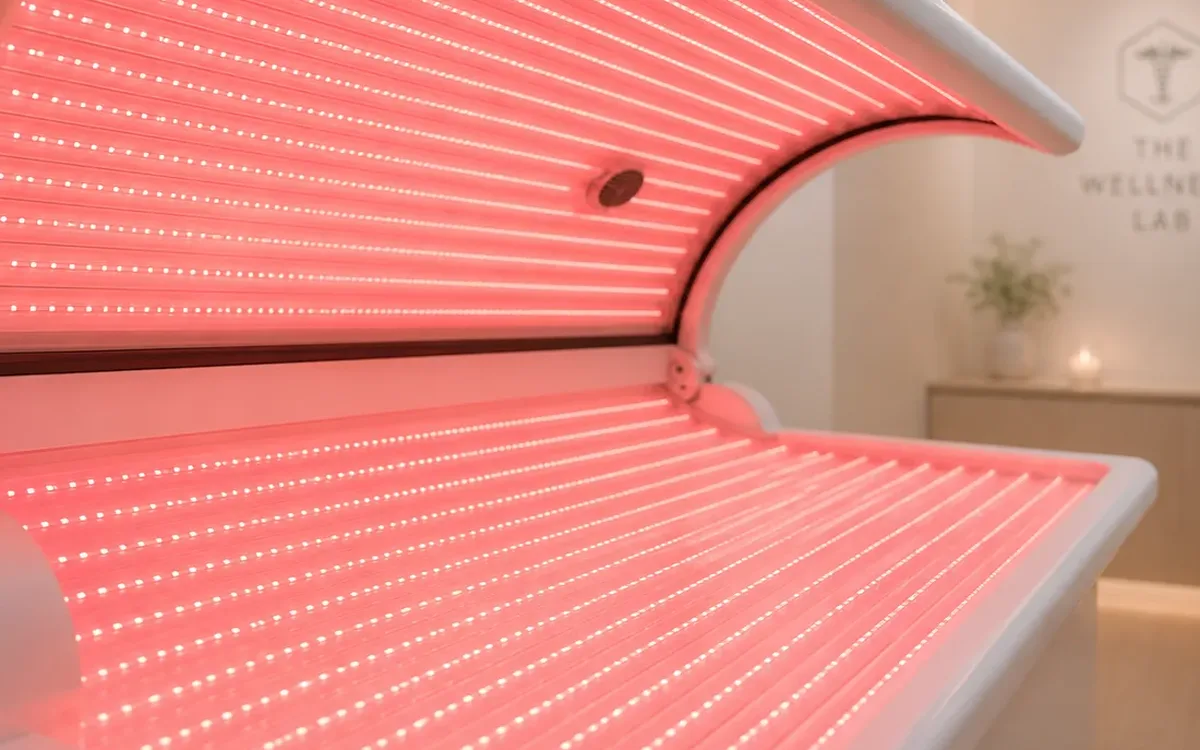
Sleep is fundamental to cognitive function, metabolic regulation, immune activity, cardiovascular health and physical recovery. Sleep disturbances are becoming increasingly common and there is growing scientific interest in non-pharmaceutical approaches that may influence sleep quality, particularly photobiomodulation using red and near-infrared light.
The relationship between light and sleep is well established. The human circadian system is sensitive to shorter wavelengths, including blue light which can suppress melatonin secretion and alter circadian timing when exposure happens in the evening. However, research goes further than the established effects of blue light exposure and investigates whether red and near-infrared wavelengths can increase melatonin production and cellular and neurological processes involved in sleep.
Photobiomodulation has been shown to alter mitochondrial activity, cellular energy metabolism, nitric oxide signalling, oxidative balance and neural activity. This means it can change how cells create energy, regulate blood flow, respond to oxidative stress and alter processes within the brain that are involved in sleep and recovery.
Early clinical evidence is beginning to support this rationale. A 2026 systematic review and meta-analysis of five randomised controlled trials involving 240 participants found that photobiomodulation produced a significant improvement in sleep quality compared with sham interventions.
Further studies have also reported improvements in sleep quality and daytime sleepiness in people with chronic insomnia and measurable changes in sleep associated delta wave brain activity. This means researchers observed changes in the slow brain waves associated with deep and restorative sleep, providing an objective measure alongside the patients reports of sleep improvement.
Additionally, other research has investigated the influence of red light on melatonin, with one study reporting improvements in sleep quality alongside increased melatonin levels. Melatonin is a hormone involved in regulating the body’s natural sleep and wake cycle and levels should increase in the evening as the body prepares for sleep.
Overall, early research provides a credible biological rationale for the potential effects of photobiomodulation on sleep quality. Findings across studies include improvements in reported sleep quality and daytime sleepiness as well as changes in melatonin levels and brain activity associated with deep sleep. However, larger clinical trials are needed to confirm optimal wavelengths and doses to inform future protocol development.
At The Wellness Lab we offer Photobiomodulation using red and near infrared light. To learn more about it and what to expect during a session visit our Photobiomodulation page.
References
Azevedo WMV et al. (2026). Photobiomodulation and sleep quality: systematic review and meta-analysis. Lasers in Medical Science. https://pubmed.ncbi.nlm.nih.gov/42322437/
Mehdizadeh M, Farnam A, Nikzad B. (2025). Transcranial photobiomodulation improves sleep quality, reduces daytime sleepiness, and modulates delta power in chronic insomnia: a randomized controlled trial. Lasers in Medical Science. https://pubmed.ncbi.nlm.nih.gov/41125953/
Zhao J et al. (2012). Red light and the sleep quality and endurance performance of Chinese female basketball players. Journal of Athletic Training. https://pubmed.ncbi.nlm.nih.gov/23182016/
Interested in this therapy?
Speak to our team to find out how we can help with your specific needs.
Book Now